

Don’t sell, but pass on: Stewardship as a compass for the future of the leisure economy - Zeeland as a case study
In the leisure economy, there is a risk that entrepreneurship rooted in strong regional ties and a long-term perspective will be lost. This is caused by a shift in ownership when businesses come under the control of strategic buyers or private-equity firms. These parties focus primarily on returns and resale. This can be at the expense of care for the local area, the community and continuity.
Stewardship and steward-ownership, the researchers argue, can safeguard these principles when ownership is transferred. Researcher Jasper Heslinga of the European Tourism Futures Institute (ETFI) at NHL Stenden: “This exploratory study shows that ownership in the leisure economy is decisive for long-term value. Stewardship can help to maintain care for the place, the community and continuity during a transfer of ownership.”
Many entrepreneurs are open to steward-ownership
It is striking that many entrepreneurs are receptive to this idea. Although only 5 per cent are familiar with steward-ownership, 40 per cent are open to it. This aligns with the values they consider important: maintaining autonomy (93%), keeping profits within the business (79%) and pursuing social goals (55%). “More and more entrepreneurs are realising that the ‘old’ way of doing business clashes with what the future demands,” says Harm IJben, project manager for the leisure economy at Regional Development Agency Impuls Zeeland. “What we’re seeing here is that many entrepreneurs already embody the principles of stewardship, but are looking for ways to embed that in ownership and governance as well.”
Steward-ownership is one of the ways to effectively embed stewardship in legal and organisational terms. In this model, control lies with the stakeholders – the so-called stewards – and the mission takes precedence. Profits may be distributed, but must primarily serve the company’s purpose. In short, the steward-owned model makes a clear distinction between decision-making rights (who manages) and economic rights (who benefits). It is therefore one possible approach, alongside other forms of long-term and area-focused ownership. Well-known Dutch examples include Efteling, Albron and Buurtzorg; internationally, these include Bosch and Patagonia. “Many companies in the sector are family businesses or entrepreneurs with a passion for the region,” says Harm. “Steward ownership fits in well with that. It helps you make choices that do justice to your local area and to future generations.”
Stewardship is an ecosystem challenge
It is important to recognise that stewardship is not a task for entrepreneurs alone, but rather requires a synergy with policy and regional conditions. It touches on issues of land use, regional value creation, labour and ownership. This makes it an ecosystem challenge that requires joint action by government, entrepreneurs and civil society organisations. Robust stewardship can only emerge when ownership, local community spirit and public conditions are interconnected. “We cannot do everything at once,” says Harm. “That is precisely why we must now consider what we wish to preserve for the future. What are we passing on? And what do we lose if we continue to focus solely on growth?”
The researchers outline three timelines. In the short term, experiments can be conducted with new forms of entrepreneurship. In the medium term, joint decisions are needed regarding land use, regional programmes and knowledge development. In the long term, broader systemic and governance adjustments are required.
A compass for sustainable choices
The conclusion is clear: the Zeeland example shows that stewardship can develop into a powerful guiding principle for the leisure economy in the Netherlands. Not as a rigid model, but as a compass for sustainable choices. In this regard, learning, adjusting course and working together are essential. The future is not predetermined—but calls for shared responsibility. The researchers at CELTH want to help further roll out stewardship in practice. Ageeth van Maldegem of Zeeland University of Applied Sciences: “We call on regions, entrepreneurs and public authorities to join us in further exploring the principle of stewardship and translating it into concrete pilot schemes and practical projects, so that it can develop into a guiding compass for a sustainable leisure economy in the Netherlands.”
Read more
The findings of the exploratory study on stewardship have been summarised in three sub-reports (in Dutch) on the project page:
About CELTH
The Centre of Expertise Leisure, Tourism and Hospitality (CELTH) (www.celth.nl) is a knowledge centre that conducts practice-oriented research and innovation within the leisure, tourism and hospitality sectors. It is a collaboration between three universities of applied sciences: Breda University of Applied Sciences, NHL Stenden University of Applied Sciences and HZ University of Applied Sciences, and connects education, business and government to develop knowledge and apply it in practice.
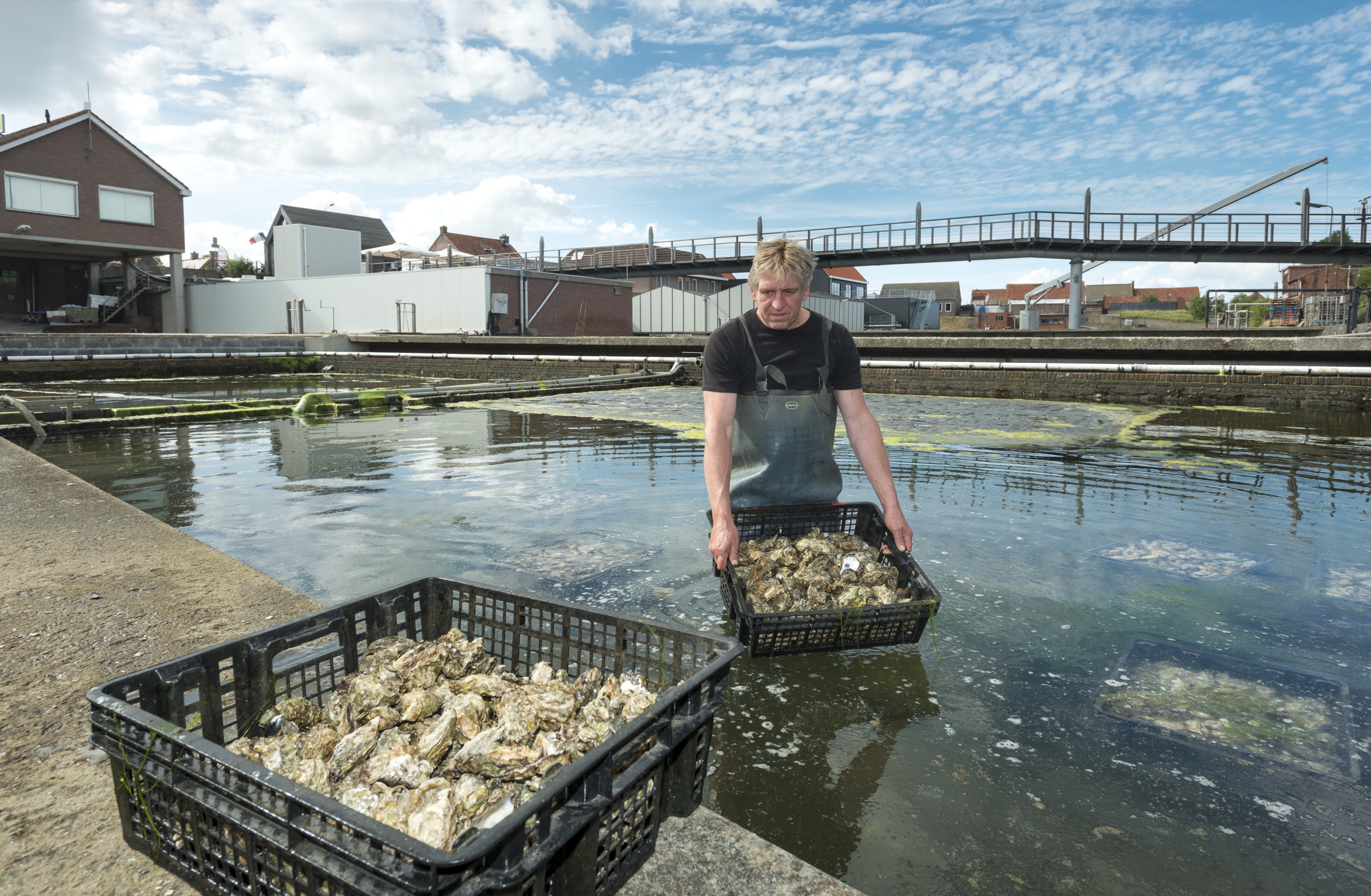
Photo: Anda van Riet - Beeldbank Provincie Zeeland