


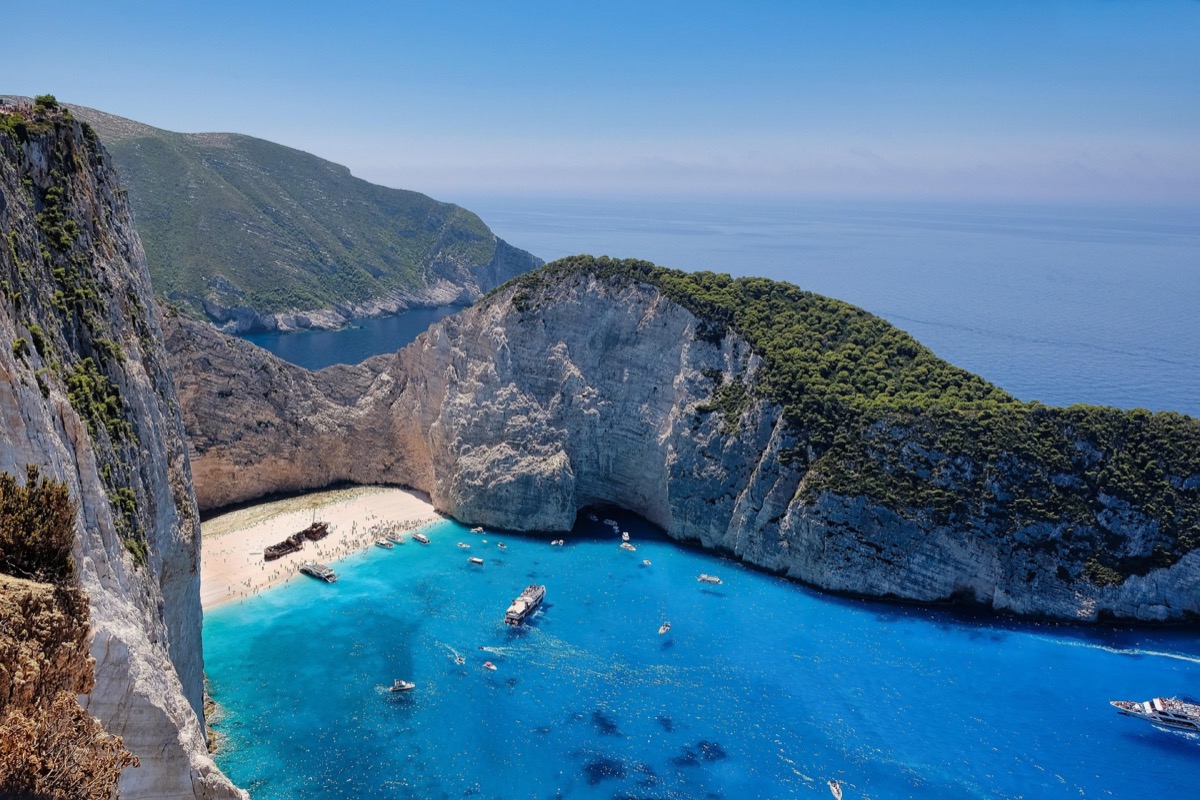
Climate change puts over a third of tourism destinations under pressure
More than a third of tourism destinations worldwide (36%) could become ‘squeezed’ by 2050: climate hazards are rising, while conditions for tourism activities are deteriorating. Under high emissions, that share rises to nearly two-thirds (62%). These are the first global results of Destination Climate RiskScan, presented on 18 November 2026 at the Tourism-themed Day of COP31 in Antalya.
Destination Climate RiskScan was developed by Travel Forward, Risklayer and CELTH (Centre of Expertise Leisure, Tourism and Hospitality). The research maps climate pressures across 2,588 subnational regions in 263 countries and territories. The outcome: climate change could reshape where, when and how tourism takes place. That has significant implications for businesses, investment and the communities that depend on tourism.
“Tourism cannot keep planning for a climate that no longer exists,” says Jeremy Sampson, CEO of Travel Forward. “These findings challenge some of the basic assumptions about where, when and how tourism can thrive.”
What does ‘squeezed’ mean?
A destination is ‘squeezed’ when two things happen at once. Exposure to climate hazards such as heat, drought and extreme weather increases. And the climate becomes less suitable for activities such as beach holidays, sightseeing and skiing, or suitable seasons become shorter.
The researchers measure this exposure with a score from 0 to 100, combining climate hazards with information about where tourism takes place. A destination is ‘squeezed’ when that score rises by at least five points and climatic suitability for an activity falls by at least five points, or its suitable season shortens by at least one month. A point is one unit on the index: not a degree Celsius, not a percentage and not a prediction of financial loss.
Importantly, ‘squeezed’ does not mean that tourism disappears, that visitor numbers fall or that a destination becomes unviable.
Heat drives the pressure, emissions make the difference
Climate pressures are rising almost everywhere, with heat the main driver. The global median climate hazard exposure score rises from 57 in 2010 to 67 by 2080 under moderate emissions, and to 74 under high emissions.
That gap shows that emissions reductions could substantially limit future climate pressures. For a typical destination, the score increases by seven points by 2080 under moderate emissions, compared with 13 points under high emissions.
Strikingly, the fastest changes are not necessarily happening where pressures are greatest today. Tropical destinations already face some of the highest levels of exposure. Southern and Eastern Europe, by contrast, face some of the steepest projected increases. Of the regions compared, the Mediterranean shows the largest rise in median exposure between 2010 and 2080: 12 points under moderate and 22 points under high emissions.
“For the first time, we can systematically compare how climate pressures are changing across more than 2,500 tourism regions worldwide,” says Bijan Khazai, CEO of Risklayer. “The picture is striking: some destinations already face intense pressures, while others are experiencing changes at a pace they have never had to plan for. By examining how different hazards combine and where changes are happening fastest, we can give destinations an early warning of pressures that might otherwise be overlooked until they begin affecting tourism operations and investment.”
Seasons are shrinking or shifting
Climate change is also shifting the length and timing of tourism seasons. In Southeast Asia, the median number of climatically suitable months for beach and swimming activities falls from eight in 2010 to six by 2080 under moderate emissions, and to three under high emissions. This suitability reflects longer-term climatic conditions such as air temperature, humidity and rainfall, not sea temperature, water quality or swimming safety.
In the Alps, suitable months for natural skiing fall from three to less than one under high emissions. Snowmaking and differences in elevation are not included.
Some destinations may see more favourable conditions for certain activities. Under moderate emissions, 75% of destinations in Northern Europe and the Nordics are classified as ‘gaining’ by 2050. That does not automatically make them winners, nor does it necessarily mean lower overall climate risk. These destinations may still face other hazards and wider impacts on infrastructure, services and communities. The study also does not model future visitor demand or economic benefits.
From global findings to local action
“Deteriorating climate conditions don’t automatically mean a destination will fail,” emphasises Harald Buijtendijk of Breda University of Applied Sciences and CELTH. “What matters is how climate change interacts with the tourism economy, local infrastructure, natural resources and the capacity of communities and tourism stakeholders to jointly implement adaptation and mitigation measures. The global findings tell us where the pressures are changing. The next challenge is understanding what destinations can do about them.”
That is why the report draws on six pilot destination assessments: in the Canary Islands (Spain), the Cook Islands, Koh Samui (Thailand), Colorado (USA), the Dolomites (Italy) and Queenstown (New Zealand). These pilots demonstrate the importance of combining global climate information with local evidence about vulnerability, infrastructure, natural resources and a destination’s capacity to adapt.
According to the researchers, climate resilience must become a core consideration in tourism planning, development and investment. Resilience extends beyond individual tourism businesses: water, energy, transport, ecosystems, workers, supply chains and communities all matter. Investment can strengthen that resilience, or undermine it.
Turning risk intelligence into practical action will require greater coordination between governments, businesses and local stakeholders. It also requires access to finance and technical expertise, particularly in destinations with limited resources. There is no single funder: locally agreed projects may need public, private and concessional resources.
Sampson: “Destinations need to think beyond protecting individual hotels and attractions. This is about the resilience of whole communities and economies, and making difficult choices about where to invest, what to adapt and what may need to change fundamentally. The stark difference between emissions pathways shows why adaptation and emissions reductions must go hand in hand. And understanding the risks is only the beginning. We now need to turn that intelligence into better decisions, coordinated action and investment in the resilience of the places and communities on which tourism depends.”
Free online platform in 2027
Destination Climate RiskScan is scheduled to become available through a free online platform in early 2027. It will help destinations, governments, tourism businesses and investors identify emerging pressures and priorities for further investigation and action. The partners aim to build on this foundation through further methodological development, practical resilience-planning tools and research into the economic implications of climate risk. This will support better decision-making and strengthen the case for investment in resilience.
The full report, Destination Climate RiskScan: First Global Results, is available at www.destinationriskscan.org.
About the research
Destination Climate RiskScan is a collaborative initiative of:
- Travel Forward, a global non-profit organisation working to advance climate action and more equitable, resilient tourism development;
- Risklayer, which specialises in risk modelling and analytics, including the assessment of natural hazards and climate-related risks;
- CELTH, the Centre of Expertise Leisure, Tourism and Hospitality, bringing together Breda University of Applied Sciences, NHL Stenden / European Tourism Futures Institute and Wageningen University & Research.