

Great Potential for Parklandscape Trynwâlden
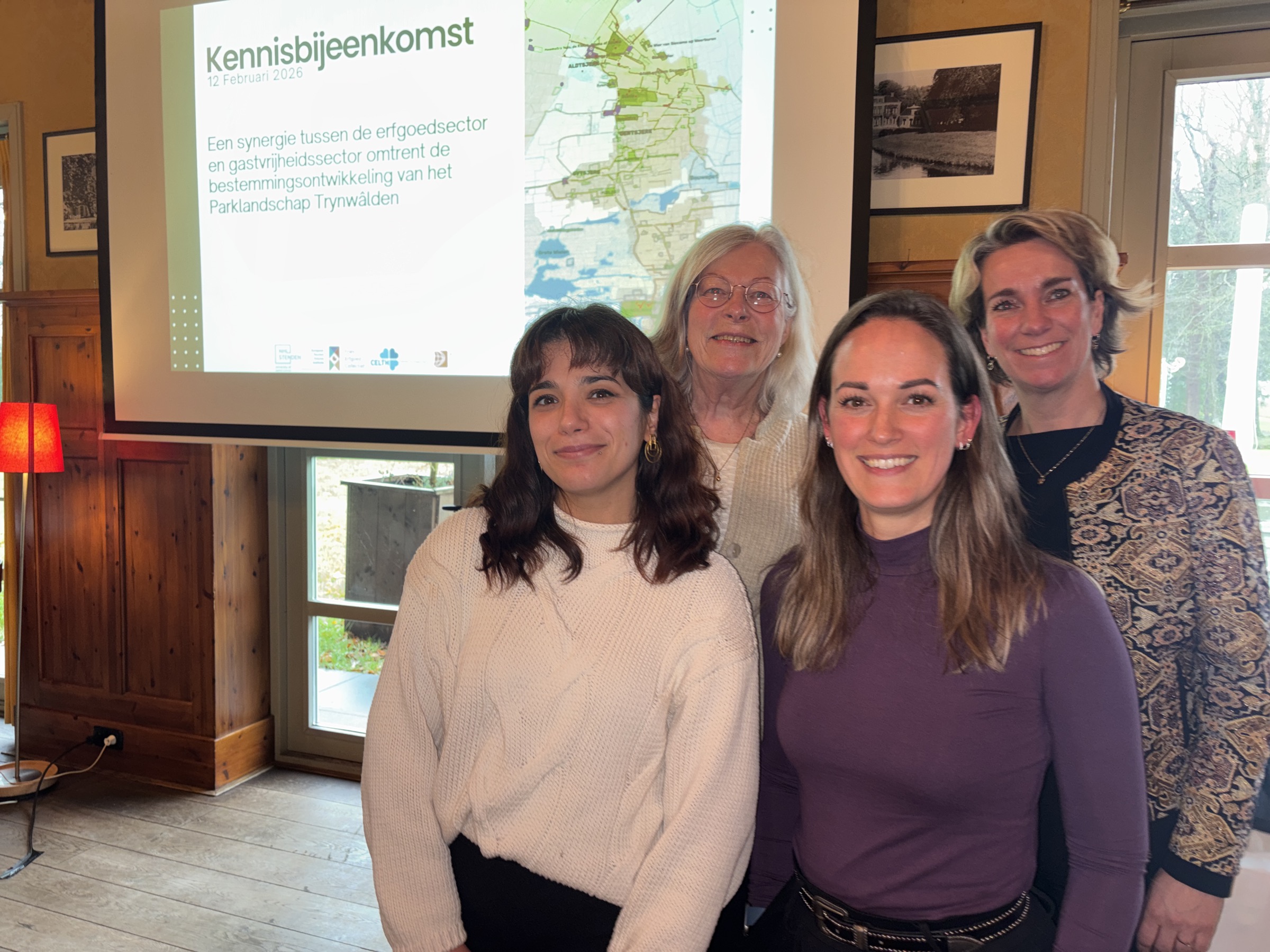
CELTH has delivered the first results of the Parklandscapes project. At an energetic meeting at Stania State in Oentsjerk, researchers from NHL Stenden/ETFI and Breda University of Applied Sciences presented the outcomes of the destination and visitor research. Students from NHL Stenden proposed ideas to make the area more attractive for Gen Z. Parklandscape Trynwâlden is rich in cultural and natural heritage with beautiful country estates (States), parks, and five village centers in the municipality of Tytsjerksteradiel. The project serves as an example for other park landscapes with high cultural and natural value.
Unique heritage region with urgent development needs
Els van der Laan from the Fries Erfgoed Collectief opened the meeting by emphasizing that Trynwâlden has a “unique collection of built green heritage,” but that the experience and visitor possibilities currently lag behind its potential. There is a strong need for a future perspective on the societal value of the heritage. At the same time, the tourist infrastructure is limited and facilities are fragmented. Within the CELTH project, work is underway on an integrated programmatic approach consisting of destination, visitor, and business research to create a development plan.
Destination research: great potential, little cohesion
Researcher Wesley Put – van den Beemt (BUas) presented the key findings from the destination research. Explorations through the area showed a landscape rich in nature, cultural history, and authentic village centers. The diversity—from forests and parks to peat marshes and historic states—makes Trynwâlden particularly suitable for slow tourism. “Our journey through the villages of Trynwâlden felt like a small expedition through the Frisian landscape.” Strong points include the layered nature of the area, seen in the combination of forests, parks, peat marshes, and lakes in which seven historic church villages with noble country houses are embedded. At the same time, essential links in the tourism offering are missing. Villages offer little incentive to stay longer; hospitality is limited and often closed; accommodations are scarce. Moreover, a recognizable positioning of Trynwâlden as a destination is lacking, as is a central strategy for marketing and monitoring.
Visitor research: much appreciation, but also clear wishes
Sarike van Slooten (NHL Stenden & ETFI) presented the results of the visitor research, in which 68 visitors were interviewed. Trynwâlden is primarily a day destination: 60% of visitors come for a day (or part of a day) and only 40% stay overnight. “There are many reasons to visit, but unfortunately few reasons to stay.”
Most visitors come from Friesland or other parts of the Netherlands. They visit Trynwâlden to enjoy nature and the surroundings, and for peace and relaxation. Some are drawn by architecture, built heritage, heritage sites, the experience of the Frisian villages and culture, or want to walk and bike in the area.
Visitors appreciate the peace, nature, heritage, and encounters with the local community. Park Vijversburg is by far the main attraction. At the same time, visitors miss facilities: more hospitality services, activities (especially for young people), information and educational elements, and better accessibility without a car. Existing hospitality and accommodations are generally rated good to excellent. But many bring their own food and drinks as they know there is little (open) supply.
When reflecting on their time in Trynwâlden, visitors say that nature, animals, and the rich heritage touched them most. These elements shape their positive experience. Many mention how enjoyable it was to walk or cycle through the area, and how the tranquility and landscapes contributed to a sense of relaxation. Several visitors also highlight hospitality, friendliness, service quality, and contact with the local community. Visitors felt very welcome and found encounters with residents special. Terms like “kind people” and “warm atmosphere” underline this. Remarkably, 71% want to visit again, and a large majority would recommend Trynwâlden.
Success factors
- Peace, Nature, and Heritage
- Tytsjerk and Gytsjerk
- Accessibility of the area
- Social interaction
- Recreational possibilities
Bottlenecks
- Limited hospitality and accommodations
- Limited activity offering
- Limited information provision and accessibility
- Limited heritage accessibility
Fragmented Destination Trynwâlden
Youth perspective: fresh ideas for new target groups
AD Tourism Management students from NHL Stenden brought a surprising youth perspective. They see opportunities in storytelling and a stronger brand identity around “Tryn”—such as TrynFestival, TrynTok, or the running event *De Tien van Tryn*. They also propose more open facilities, a small-scale holiday park, and hospitality at the marina.
Recommendations
In summary, Trynwâlden is a beautiful area with potential, but essential links are missing. Based on the destination and visitor research, the researchers recommend strengthening the visitor experience by:
- Enhancing the core experience of peace, nature, and heritage
- Strengthening and connecting key locations (Tytsjerk, Gytsjerk, Park Vijversburg, Stania State)
- Stimulating encounters and local involvement
- Expanding hospitality offerings and opening hours
- Increasing the variety of accommodations
- Diversifying the activity offering
- Improving information provision
- Using storytelling to reveal cultural-historical value
- Strengthening cohesion between villages
- Improving accessibility via public transport
Next steps
The research insights will contribute to the development plan for Parklandscape Trynwâlden, serving as an example for other Frisian destinations. The meeting at Stania State underlined the broad willingness to collaborate on a future-proof, livable, and meaningful destination.