

Four perspectives point the way to Trynwâlden as a conscious destination
Integrated research into destination, visitors, residents and entrepreneurs maps out a shared foundation and four lines of development for the Trynwâlden Park Landscape.
Background
The Trynwâlden Park Landscape, with seven historic church villages between Leeuwarden and Dokkum, has a rare combination of heritage, nature and community spirit. But how do you turn those qualities into a destination that not only captivates visitors, but also contributes to residents’ quality of life and the earning capacity of local entrepreneurs?
That question was central to the research project ‘Gastvrij Parklandschap Trynwâlden’ (Hospitable Trynwâlden Park Landscape), carried out by CELTH in collaboration with researchers and students from NHL Stenden University of Applied Sciences, Breda University of Applied Sciences (BUas) and Fries Erfgoed Collectief.
Between March 2025 and August 2026, the team examined Trynwâlden’s potential from four angles: the destination itself, the visitor, the resident and the entrepreneur.
Objective
The research set out to answer the question of how collaboration between heritage sites and the hospitality sector in Trynwâlden can be strengthened, with the aim of contributing to Trynwâlden’s development into a conscious destination. A conscious destination is one that works on quality of place, quality of experience (visitors), quality of life (residents) and quality of work (entrepreneurs) alike. It is no coincidence that the four sub-studies were divided along these lines: precisely by placing them side by side, it would become clear whether the same patterns were confirmed from multiple perspectives.
Approach
Each component combined desk research with its own data collection. The destination study mapped the current tourism and recreation offer and the stakeholders in the area through a Heneghan 5A’s analysis, a SWOT analysis, stakeholder mapping (77 stakeholders in the area) and observations. In the visitor study, the visitor experience was mapped through a survey of 68 respondents (July–September 2025) and Visitor Journey Mapping based on student observations. How residents view their living environment was examined through a survey of 150 inhabitants from all seven villages (January–February 2026). The perspective of entrepreneurs was examined using the COM-B behavioural model and in-depth interviews with seven heritage sites and entrepreneurs (January–June 2026), identifying where collaborative capacity in the hospitality sector can be strengthened, partly on the basis of two reference cases from North Brabant: Van Gogh National Park and the De Groote Heide cross-border nature park.
Conclusions
The strength of this research lies not only in the individual findings, but above all in what happens when you place them side by side: four independently conducted sub-studies then paint a remarkably consistent picture.
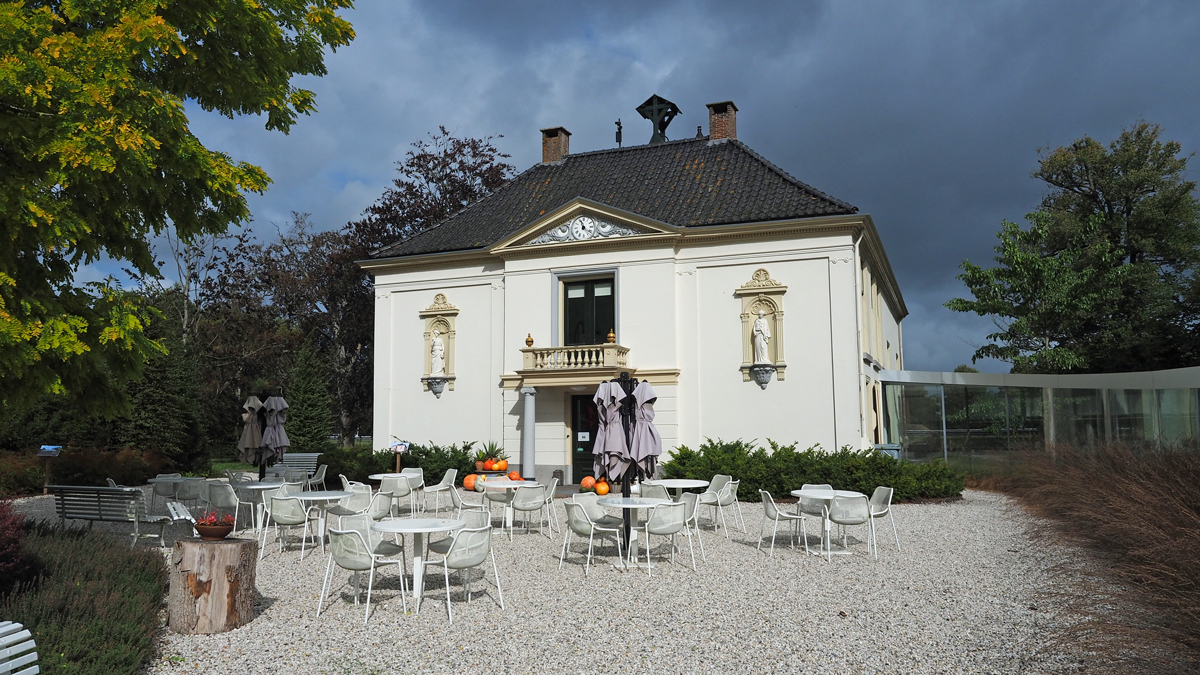
From the perspective of the destination, Trynwâlden turns out to have a rich but fragmented heritage base: Roodbaard landscape parks such as Vijversburg and Staniastate, seven church villages and valuable nature areas that are experienced as separate elements rather than as one destination. The area has no central information provision, inconsistent signposting, limited parking, few public facilities (toilets, rest areas, maps) and a limited range of food and drink outlets that are open year-round. The accommodation offer, consisting mainly of campsites, is one-sided, with few farm rooms and B&Bs and hardly any small-scale hotels or homestays, while the range of activities is aimed predominantly at an older audience.
From the perspective of the visitor, the quiet landscape, natural beauty and rich heritage form the area’s most distinctive value. The experience of tranquillity, nature and heritage often exceeds expectations: 70% rate their visit as positive or better and 71.4% want to return, with Tytsjerk, Gytsjerk, Park Vijversburg and Stania State as valued anchor points. The warm welcome and genuine hospitality of the local community are highly appreciated. What visitors miss most are food and drink outlets and shops (32%), which have limited and unreliable opening hours, activities for young people (26%) and information provision (21%). Visitors also mention the limited variety of accommodation, a lack of activities, limited parking and public transport.
From the perspective of residents, the perceived quality of life is high: nature and landscape are unanimously appreciated (90% satisfied, 0% dissatisfied) and 87% feel safe. Accessibility scores lowest (70% satisfied), while shops (50%) and food and drink outlets (55%) generate the most dissatisfaction, particularly among younger residents (aged 18–25), who are the least satisfied on almost every aspect. As areas for improvement, residents mention better public transport, a broader and more varied range of food and drink outlets and shops, and more events and activities for different age groups.
From the perspective of the entrepreneur, collaborative capacity is certainly present, but it remains small-scale, local and ad hoc: entrepreneurs are insufficiently familiar with each other’s offer, previous initiatives to work together more closely petered out, and there is no shared brand with an online platform, no neutral coordinating party and no jointly supported story.
What stands out? The same strengths recur in all four sub-studies: nature and tranquillity, built and intangible heritage, community spirit and hospitality, and the well-known attractions, with the country estates in the leading role. The bottlenecks are also confirmed time and again, independently of one another: a shortage of food and drink outlets with irregular opening hours, accommodation dominated by campsites, too few activities, particularly for young people, weak information provision and signposting, limited accessibility without a car, the absence of a shared brand and a lack of structural visitor data. Across the four perspectives, the conclusions are strikingly consistent. This points to robust findings and patterns that have been established independently of one another.
Lines of development
Based on this coherence, the research team recommends four lines of development that can jointly strengthen the quality of experience, life and work:
- Collaboration and communication
Move from ad hoc initiatives to lasting collaboration and communication in the area. Think of a WhatsApp group with a (rotating) coordinator, a neutral collaboration space for initiatives and knowledge sharing, and cooperation with education. In addition, existing collaborations should become more visible to residents and visitors. - Accessibility and signposting
The area needs to become easier for visitors to reach and find. This can be achieved through clear and coherent signposting, a digital heritage and information tool, digital multilingual walking and cycling maps, and by making parking facilities easier to find. - Events, activities, food and drink, and shops
A broader, more reliable range of events, activities, food and drink outlets and facilities is needed. Examples include a varied range of activities for young and old, more events for young people, aligning the opening hours of food and drink outlets and shops, and exploring more varied types of holiday accommodation. - Experiencing the story and identity
There needs to be one recognisable story so that Trynwâlden is experienced as a single destination. This can be done by positioning the ‘Trijn’ brand more strongly, making the heritage story visible at every site and village, developing an experience or story route that connects villages and heritage sites into one coherent destination, and creating a single central information point about the area on a communication platform.
Only when the capability, opportunity and motivation to collaborate are strengthened simultaneously – preferably through a neutral intermediary space and a shared story of the area – does a collection of villages, estates and businesses turn into one conscious destination, where the quality of experience, life and work mutually reinforce one another.