


Keynote ENTER26: The AI transformation of tourism: opportunities, bottlenecks, and a new reality
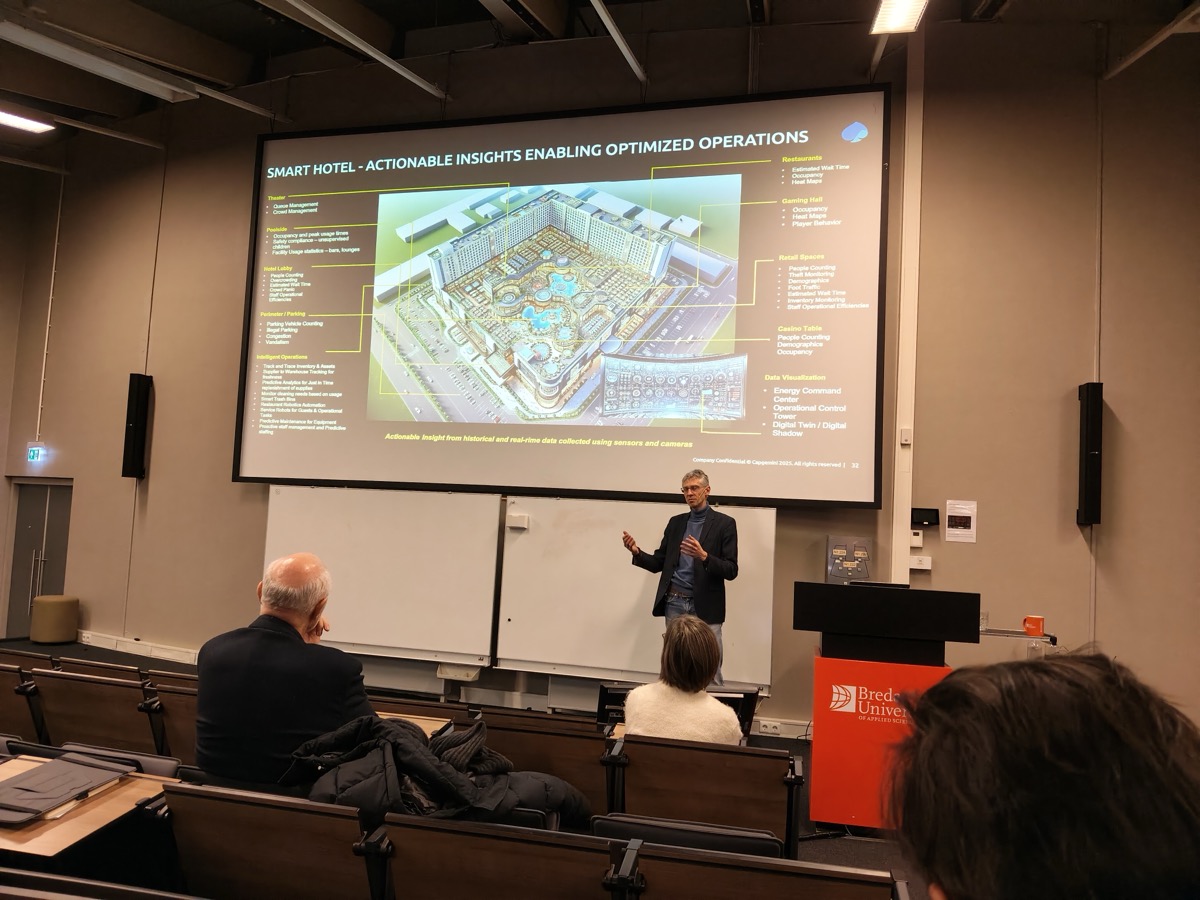
During ENTER26 at Breda University of Applied Sciences, Sergey Patsko (Capgemini) outlined a sharp and sometimes uncomfortable analysis of the state of AI in travel and hospitality. Whereas 2025 was dominated by hype, promises, and an insatiable fear of missing out, 2026 will be the year of realism. Not because technology is standing still—on the contrary—but because organizations are now truly confronting the structural challenges that stand in the way of adoption.
The result: a sector that is rapidly reinventing itself, but at the same time struggling with trust, data, integration, and regulation.
Declining confidence: from hype to realism
One of the most striking trends Patsko described is the sharp decline in confidence in AI. “Whereas in 2024, 43% of executives said they trusted AI as an autonomous agent in the organization, by 2025 that figure had fallen to just 27%. That's a dramatic decline.” The cause lies not in the technology itself, but in a lack of understanding of how generative AI works. With traditional machine learning, people knew exactly what data was being used, how models were trained, and what their limitations were. That instilled confidence in both the builders of the models and the entrepreneurs who implemented them. New foundation models, however, are black boxes. Patsko: “No one, not even developers, can fully explain why they give certain answers.” In a sector where safety, reliability, and compliance are crucial (think aviation, cruises, or hospitality), this leads to reluctance.
In addition, AI sometimes leads to errors that have a direct impact on consumers, such as incorrect pricing information, misleading chatbots, or accidents involving autonomous vehicles. Every incident, no matter how rare, is widely publicized and reinforces doubt.
Conclusion: trust is becoming the new competitive advantage. Only companies that prioritize transparency, explainability, and governance will scale up.
Data: the biggest bottleneck in AI adoption
According to Patsko, technology is no longer a limitation: "The challenges lie in data, scale, legacy systems, and trust. Some major challenges:
Insufficient usable data for training
“Data is currently one of the biggest obstacles,” said Patsko: “You have to curate it, catalog it, and make it available in real time.” The paradox is that the travel industry has a huge amount of data, but often not the right data, not in the right form, and certainly not in the right place. In addition, companies only store operational data for a short time. Disney, Patsko said, only stores camera footage for a month. As a result, incidents are rare and difficult to use for model training. The solution is increasingly becoming synthetic data.
1. Fragmented, outdated systems
Hotels, airlines, and tour operators work with dozens, sometimes even hundreds, of legacy systems that have been built up over many years. In his presentation, Patsko emphasized that this IT legacy is one of the biggest practical obstacles to AI adoption. The problem is not only that systems are old, but above all that data is spread across separate platforms that were never designed to communicate with each other. As a result, data is difficult to access, inconsistent, incomplete, or simply unavailable for use by modern AI models. Patsko said that companies often think that a ready-made AI tool will deliver immediate value, but that in practice this is not the case: “Off-the-shelf AI does not work in large organizations: you have to integrate AI into your existing systems, and that requires customization.”
2. From cookies to first-party data
New privacy legislation (such as the AI Act) makes third-party cookies practically impossible. As a result, travel organizations must collect, manage, and monetize high-quality first-party data themselves. This is leading to new business models such as travel media networks, where hotel chains and airlines use their customer data for personalized advertising.
The overall conclusion is that those who fail to get their data house in order run the risk of disappearing from the value chain altogether.
3. Regulation: a game changer for the business model
Regulation is not a brake, but a fundamental shift in digital ecosystems. European legislation determines which data may and may not be used, while geopolitical risks (such as potential blockades of American models) are forcing organizations to think about digital sovereignty. For travel & hospitality, this means:
- models must be transparent;
- datasets must be compiled legally and responsibly;
- AI applications must be explainable to guests and regulators;
- companies must be able to prove how AI decisions are made.
This pressure makes it necessary for organizations to invest in governance structures: audit mechanisms, data catalogs, risk frameworks, and responsible AI processes. Capgemini is working with various hospitality brands, including Marriott, on what Patsko calls “Smart Hotels”: “We have developed AI tools for guests, property managers, and hotel organizations.”
Integration: AI only works if it works in the operation
One of the hard lessons of 2025: AI tools do not just work out of the box in complex travel organizations. Over-the-counter solutions prove insufficient because:
- systems do not talk to each other;
- APIs are lacking;
- data is not synchronized;
- processes are still manual or fragmented.
Many pilots work well on a small scale but fail in production. So the real challenge is not building AI, but integrating it operationally into thousands of touchpoints: from guest services to housekeeping, from pricing to facility management.
This is driving demand for agentic workflows: AI agents that perform actions autonomously, negotiate with hotel or airline agents, or proactively solve problems before a guest notices.
What does this mean for companies in tourism?
The most important consequence is that AI will not only turn processes upside down, but the entire revenue model.
1. Sales are shifting from SEO to agent to agent.
Where hotels used to optimize their websites for Google, they will now have to optimize them for AI agents such as ChatGPT or Perplexity. Bookings will increasingly be made through travelers' personal digital assistants.
2. Marketing is becoming extremely personalized.
Campaigns are optimized in real time. Major brands are bringing marketing back in-house. First-party data and proprietary media ecosystems are becoming crucial.
3. Service becomes predictive rather than reactive
Examples such as Tesla show that companies can use data to anticipate problems rather than wait for complaints. In hospitality, this means:
- automatic rebooking in case of flight delays;
- proactive alerts for disruptions;
- personalized recommendations based on context and behavior.
4. New revenue streams are emerging
Hotels and airlines are becoming data platforms as first-party data providers. They earn not only from rooms and seats, but also from advertising, additional services, and personalized upsells throughout the entire journey.
Finally: AI makes the sector smarter—but requires maturity
The travel industry is on the verge of a huge transformation. AI offers unprecedented opportunities: more efficient operations, new revenue streams, and hyper-personalized guest experiences. But success requires maturity: good data, clear governance, strong integration, and above all, regained trust. Those who invest in this will be the winners of the next digital journey. Those who lag behind will lose touch for good.