


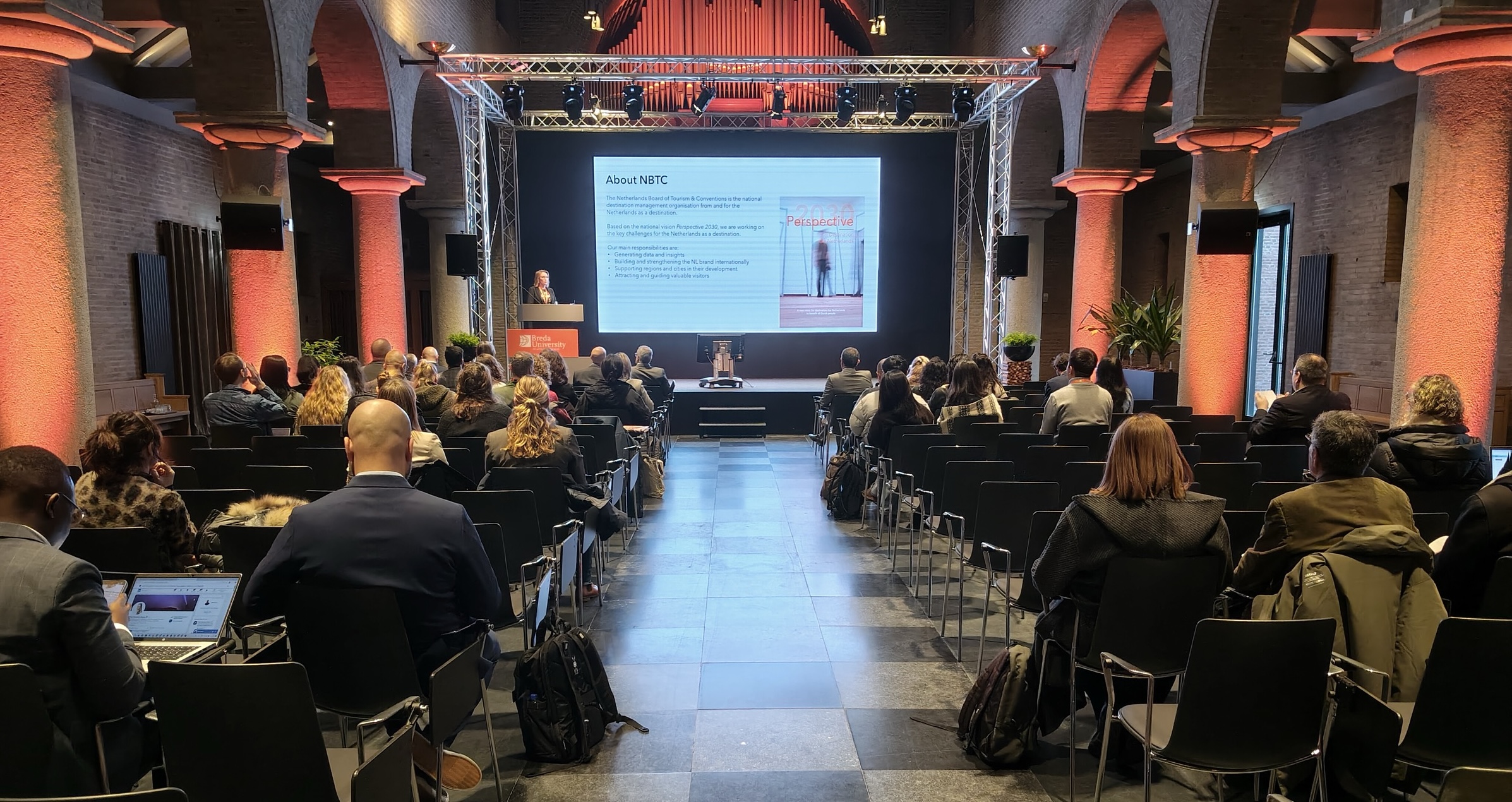
Keynote ENTER26: Digital Vision in Motion: How NBTC is accelerating the digital transformation of the Dutch leisure sector
During the ENTER26 conference, Sanne van Let, Digital Manager at NBTC, presented an inspiring and urgent message: “The digital transformation of the Dutch tourism and hospitality sector must take place faster, smarter, and above all, more collaboratively.” Her presentation, Digital Vision in Motion: Actions, Impact, and the Journey Ahead, offered a clear insight into where the sector stands, the challenges it faces, and the initiatives NBTC is developing to accelerate change.
Digital transformation as a prerequisite for future-proofing
According to Van Let, digitization is not an end in itself, but a powerful driver of value creation throughout the tourism chain: from hospitality and experience to business operations and sustainability. The Digital Expedition Vision, which NBTC launched in 2024 together with more than 40 partners, forms the blueprint for this. This vision aims to connect fragmented initiatives, provide joint direction, and ensure that valuable developments do not get stuck in isolated pilots that disappear after a year.
The need is great: companies that fail to digitize sufficiently lose their market position and, with it, their future viability. And in a sector that consists mainly of small to very small SMEs—more than half of which have fewer than 30 employees—that risk is very real.
The digital gap in the hospitality sector
Although the Netherlands scores highly in terms of digital skills and internet use in general, the hospitality sector presents a worrying picture. Research by the European Investment Bank, among others, shows that during and after COVID-19, many sectors increased their digital investments, but hospitality lagged behind. NBTC's own digitization monitor confirms this:
- 48% of tourism organizations have no digital strategy.
- 55% experience clear barriers to further digitization.
- 61% of that group say they lack knowledge and skills.
The result? Less innovative power, less data-driven working, less resilience in times of change. Precisely where the sector needs to be able to switch gears more quickly.
From fragmentation to collaboration
An important finding during the drafting of the Digital Expedition Vision: virtually every region, DMO, and local organization was setting up its own digital projects, often with similar goals, but without any connection between them. NBTC therefore positions itself as a connector and driver. The approach revolves around three pillars:
- Connect: building a network of professionals active in digitization within tourism.
- Inspire: by sharing digital examples, highlighting success stories, and setting up inspiration platforms.
- Ignite: sparking new initiatives through programs that lower barriers and encourage experimentation.
This combination should lead to a sector that knows how to find each other, learns from each other, and speaks the same language when it comes to data, technology, and digitization needs.
Concrete activities: from accelerators to a national data landscape
- Inspiration hub and network building
NBTC is actively building an overview of digital initiatives in the country. On the inspiration platform, professionals can view digital cases, find partners, and see which regions are doing similar projects. This prevents duplication and accelerates knowledge sharing.
- Accelerator program for rapid innovation
In 2023, NBTC launched an accelerator in which three partners developed digital prototypes in just five weeks and with limited time investment. The results show how accessible innovation can be:
- An AI application that monitors tables in restaurants, enabling staff to work more efficiently.
- A Copilot-like editing system that helps DMO teams create content that fits their strategy more quickly.
- An implementation plan for integrating city cards, so that visitor flows and value creation can be better organized.
The program illustrates that short, intensive processes can have a major impact and teach organizations to make digital experimentation part of their working methods.
- National skills program
With support from the Ministry of Economic Affairs and Climate Policy, NBTC is working on a national program to help tourism entrepreneurs improve their digital skills. This will range from basic digital knowledge to topics such as data use, AI, privacy, and digital marketing. The goal is to lower the threshold so that SME entrepreneurs don't drop out but instead get on board.
- Towards a national data layer for tourism
NBTC is building a broad data landscape that brings together open and non-open data: visitor flows, marketing data, market information, and operational data from companies. A structural data system prevents fragmentation, makes benchmarking easier, and helps entrepreneurs and regions make better decisions.
What is needed to make a real impact?
Van Let lists four conditions that are essential for successful digital transformation:
- Resources: time and money, but above all priority. Digitization must become more important than the issues of the day.
- Relevance: solutions must be sector-specific and fit the reality of SME entrepreneurs.
- Data: accessible, usable, and understandable for small players who do not have their own data teams.
- Skills: employees must have sufficient knowledge to use digital tools effectively.
She also emphasizes three keys to success:
- Collaboration instead of fragmentation.
- Making initiatives structural, not letting them evaporate after project funding.
- Bridging the gap between research and practice, so that knowledge from the academic world better reaches entrepreneurs.
A shared digital future
Van Let's message is clear: the sector is at a tipping point. Technology is developing faster than ever, visitors expect increasingly personalized and frictionless experiences, and entrepreneurs need support to keep up. Only by working together can the Netherlands build a future-proof hospitality sector. As she concludes: “Only together can we create a future-proof and innovative hospitality sector.”